Home Engage Us
ORIGENNT / Consulting / Organisational Design

Structure is
not the answer.
The right structure is.

Most organisations outgrow their structure before they realise it. We help India's leading enterprises design organisations that are built for their strategy — not inherited from their history.

Practice at a Glance
Redesigns Completed 65+
Avg. Efficiency Gain 31%
Decision Speed Improvement 2.6x
Employee Clarity Score Uplift +44pts
Avg. Engagement Length 6–12mo
Scroll
Engagements Delivered
65+
Avg. Efficiency Gain
31%
Sectors Served
IT · BFSI · Mfg · FMCG
Typical Engagement
6–12 months
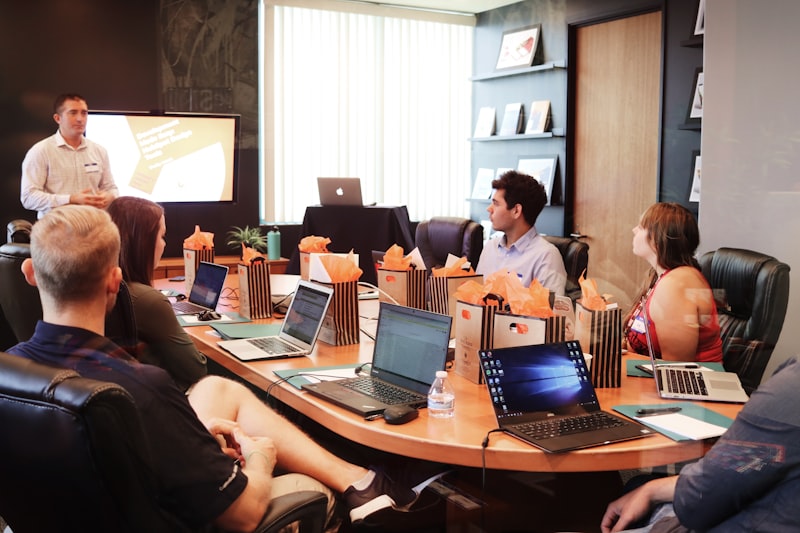
Leaders in a boardroom discussing organisational structure
Leadership teams across India grappling with organisational complexity
The Challenge

When structure becomes the obstacle.

Rapid growth, M&A activity, digital transformation and new market entry all stress-test an organisation's design. Reporting lines blur, accountability becomes diffuse, decision-making slows, and talented people leave because they don't see a clear path.

The cost is significant — McKinsey research indicates that poor organisational design accounts for up to 20% of productivity loss in growing enterprises. We help you eliminate that drag.

Role Clarity
Spans & Layers
Governance Design
Decision Rights
Matrix Structures
Operating Model
What We Deliver

Six ways we rebuild your foundation.

Our organisational design work spans the full architecture — from enterprise-level operating model redesign to targeted interventions around spans of control, decision rights, and capability frameworks.

🏛️
01
Operating Model Design
End-to-end redesign of how your business creates and delivers value — aligning structure, process, technology and talent to your strategic intent.
Discuss this →
🔀
02
Spans & Layers Optimisation
Data-led analysis of management layers, reporting lines and spans of control — removing unnecessary complexity and accelerating decisions.
Discuss this →
⚖️
03
Decision Rights & Governance
Clarity on who decides what, at which level. We design RACI frameworks, delegation authorities and governance forums that cut through confusion.
Discuss this →
🧩
04
Role Architecture & JD Framework
Comprehensive role design — job families, career ladders, competency levels and role profiles that support hiring, development and retention.
Discuss this →
🔗
05
Post-Merger Integration Design
Structuring merged entities for synergy realisation — from Day-1 operating model to 18-month integration roadmap and cultural alignment.
Discuss this →
📐
06
Shared Services Design
Building centralised capability centres for finance, HR, IT and legal — enabling scale without proportional headcount growth.
Discuss this →
The Data

Why most redesigns don't stick.

Research across 200+ Indian enterprise transformations reveals a consistent pattern: most organisations fail at organisational redesign not because of poor strategy — but because of poor execution of the human and structural dimensions.

ORIGENNT's methodology is specifically designed to address each of these failure points.

Primary Causes of Redesign Failure
Leadership misalignment 68%
Poor change communication 54%
Role ambiguity post-launch 47%
Insufficient capability building 39%
Technology not aligned to new model 31%
Where Redesign Value Is Created
100 PERCENT
Structural Design38%
People & Talent29%
Process Design21%
Technology Fit12%
72%
of companies redesign within 3 years of major growth
4.2x
faster execution in well-designed organisations
Our Method

A proven path to structural clarity.

Our four-phase methodology is built on the belief that organisational design is a human endeavour, not a structural exercise. Stakeholder engagement, communication and capability building are embedded throughout — not bolted on at the end.

01
Weeks 1–4
Discover
Comprehensive diagnostic — interviews, data analysis, workflow mapping, and spans & layers audit across the full organisation.
02
Weeks 5–10
Design
Co-create the target operating model with leadership. Prototype structural options, stress-test with scenarios, build the to-be blueprint.
03
Weeks 11–20
Transition
Sequence and execute the transition. Role placements, governance activation, communication cascade, and team restructuring.
04
Ongoing
Embed
90-day pulse checks, manager capability uplift, and structural fine-tuning to ensure the new design delivers its intended outcomes.
The best organisational design is invisible — people stop thinking about structure and start focusing entirely on the work.
ORIGENNT Practice Lead
Organisational Design & Effectiveness
ORIGENNT Private Limited
Measured Outcomes

Numbers that tell the full story.

Every ORIGENNT organisational design engagement is governed by an outcomes framework agreed at kickoff. We track and report against your specific KPIs throughout — and stay accountable to them long after we've left.

The averages below are drawn from across our completed redesign portfolio.

31%
Average efficiency improvement across redesigned units
2.6x
Faster decision-making in restructured governance models
44pts
Average uplift in employee role clarity scores (survey-based)
89%
Of engagements delivered within agreed scope and timeline
Modern office space India
Operating Model Work
Enterprise-wide structural redesigns
Team workshop
Co-Design Workshops
Collaborative leadership sessions
Handshake partnership
Client Partnership
Long-term embedded relationships
Data and analytics
Data-Led Diagnostics
Evidence-based redesign decisions
Team collaboration tech
Implementation Support
Hands-on transition execution
Get Started

Is your structure holding your strategy back?

A 60-minute diagnostic conversation with our Organisational Design practice lead will identify your three most critical structural constraints — at no cost.

We work with boards, CEOs and CHROs across India's growth economy. If you're scaling, restructuring or integrating — we should talk.